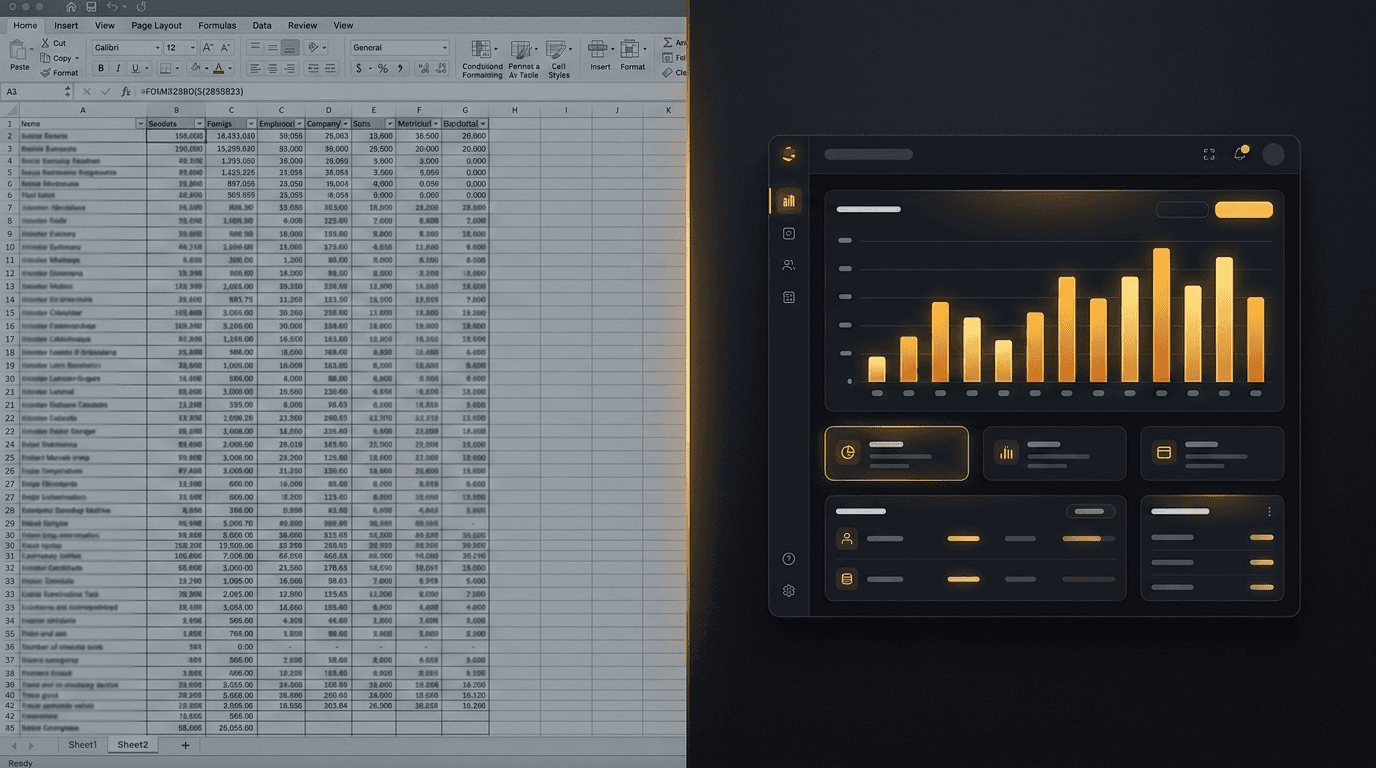
Spreadsheets vs. Apps: What Is the Best Way to Track Your Net Worth?
Spreadsheets vs. Apps: What Is the Best Way to Track Your Net Worth?
You have decided to track your net worth. Great. Now comes the tooling question: should you use a spreadsheet, download a finance app, or try something else entirely?
Each approach has real tradeoffs. Let us break them down honestly.
Option 1: The Spreadsheet
Spreadsheets (Google Sheets, Excel, Notion tables) are the default starting point for most people. And for good reason.
What Works
- Full control: You own every formula, every column, every calculation. Nothing is hidden.
- Free: No subscription fees, no premium tiers.
- Customizable: Track exactly what you want, how you want. Add columns for notes, categories, or custom metrics.
- Permanent: Your data does not depend on a company staying in business.
As FinancialAha points out, spreadsheets excel at forward-looking projections and "what-if" scenarios, something most apps handle poorly.
What Does Not Work
- Setup effort: Building a good net worth tracker from scratch takes time. Formatting, formulas, charts.
- No automation: You manually type every number, every month. Miss a month and your data has gaps.
- Visualization limits: Charts in Google Sheets are functional but not inspiring. Building allocation breakdowns or trend lines requires spreadsheet expertise.
- Error-prone: One wrong formula or accidentally deleted row can break months of tracking.
- Multi-device friction: Editing a spreadsheet on your phone while checking your brokerage app is not a great experience.
Who It Is For
DIY types who enjoy building systems and want maximum flexibility. If you are the kind of person who has a 47-tab spreadsheet for your wedding budget, this is your lane.
Option 2: Bank-Connected Apps
Apps like Empower (formerly Personal Capital), Monarch Money, and similar services promise automatic net worth tracking by connecting directly to your bank and brokerage accounts.
What Works
- Automation: Balances sync automatically. No manual entry.
- Polished dashboards: Professional charts, allocation views, and performance metrics.
- Low friction: Set it up once, then just check in periodically.
What Does Not Work
- Broken connections: Anyone who has used Plaid-powered apps knows the pain. Connections break. Accounts stop syncing. Multi-factor authentication prompts require constant re-linking. Burton Wealth notes that this is one of the most common complaints with finance apps.
- Privacy concerns: These apps need your bank login credentials or access tokens. In 2024, a major privacy litigation against Plaid alleged the company collected more financial data than authorized through interfaces designed to look like bank login screens.
- Limited asset types: Most apps handle stocks and bank accounts well but struggle with real estate, crypto across multiple wallets, private equity, collectibles, or international assets.
- Subscription fees: Quality apps typically cost $5-15/month. That adds up.
- Vendor lock-in: If the company shuts down or raises prices, your historical data may be lost.
Who It Is For
People who prioritize convenience above all else and are comfortable sharing credentials with third parties. Best if your finances are straightforward (domestic bank accounts and standard brokerage).
Option 3: Manual-First Tracking Apps
This is the newer category. Apps designed for manual input but with the polish and features of a dedicated app. No bank connections required.
What Works
- Privacy by design: No credentials shared, no data aggregators involved, no risk of breaches.
- Reliability: Nothing breaks because there is nothing to sync. Your data is always accurate because you entered it.
- Broad asset support: Since you are entering values manually, you can track anything, from a stock portfolio to a vintage car collection to private business equity.
- Better than spreadsheets: Purpose-built UI, automatic charts, goal tracking, and allocation analysis without formula gymnastics.
- Quick updates: A dedicated interface makes monthly updates fast, typically 5 minutes or less.
What Does Not Work
- Not fully automated: You still need to check your accounts and enter numbers yourself.
- Requires discipline: Monthly consistency is on you (though good apps send reminders).
Who It Is For
People who want the control and privacy of spreadsheets combined with the polish and insights of dedicated apps. Especially useful if you have assets spread across many platforms, hold international or alternative assets, or simply do not want to share bank credentials.
The Comparison
| Factor | Spreadsheet | Bank-Connected App | Manual Tracker App |
|---|---|---|---|
| Privacy | High | Low | High |
| Automation | None | High | None |
| Reliability | High | Low (broken syncs) | High |
| Asset types | Unlimited | Limited | Unlimited |
| Visualization | Basic | Professional | Professional |
| Setup effort | High | Low | Low |
| Monthly effort | ~10 min | ~0 min | ~5 min |
| Cost | Free | $5-15/mo | Free-Low |
Our Take
We built MyMoneyViz because we found ourselves in the gap between spreadsheets and bank-connected apps. We wanted professional visualizations, goal tracking, and multi-asset support without sharing bank credentials or fighting broken connections.
The 5-minute monthly update is a feature, not a bug. That brief check-in with your finances is when the real insights happen. It is the moment you notice your allocation drifted, your emergency fund grew faster than expected, or you are ahead of schedule on your savings goal.
If automation is your top priority, a bank-connected app might be right for you. If you love building systems, a spreadsheet is hard to beat. But if you want the best of both worlds (control, privacy, and a great interface) a manual-first tracker is worth trying.
Getting Started
Whatever tool you choose, the best one is the one you will actually use. Start simple:
- Pick your tool
- Enter your current balances
- Set a monthly reminder
- Review your trend after 3 months
Three months of data is enough to see a trend. Six months is enough to change your behavior. A year is enough to change your financial trajectory.